Remote patient monitoring tools for independent medical practices
Remote patient monitoring tools for independent clinics can add a new layer of care between visits, but they also add another stream of data to an already crowded physician workflow. The technology is not the difficult part.
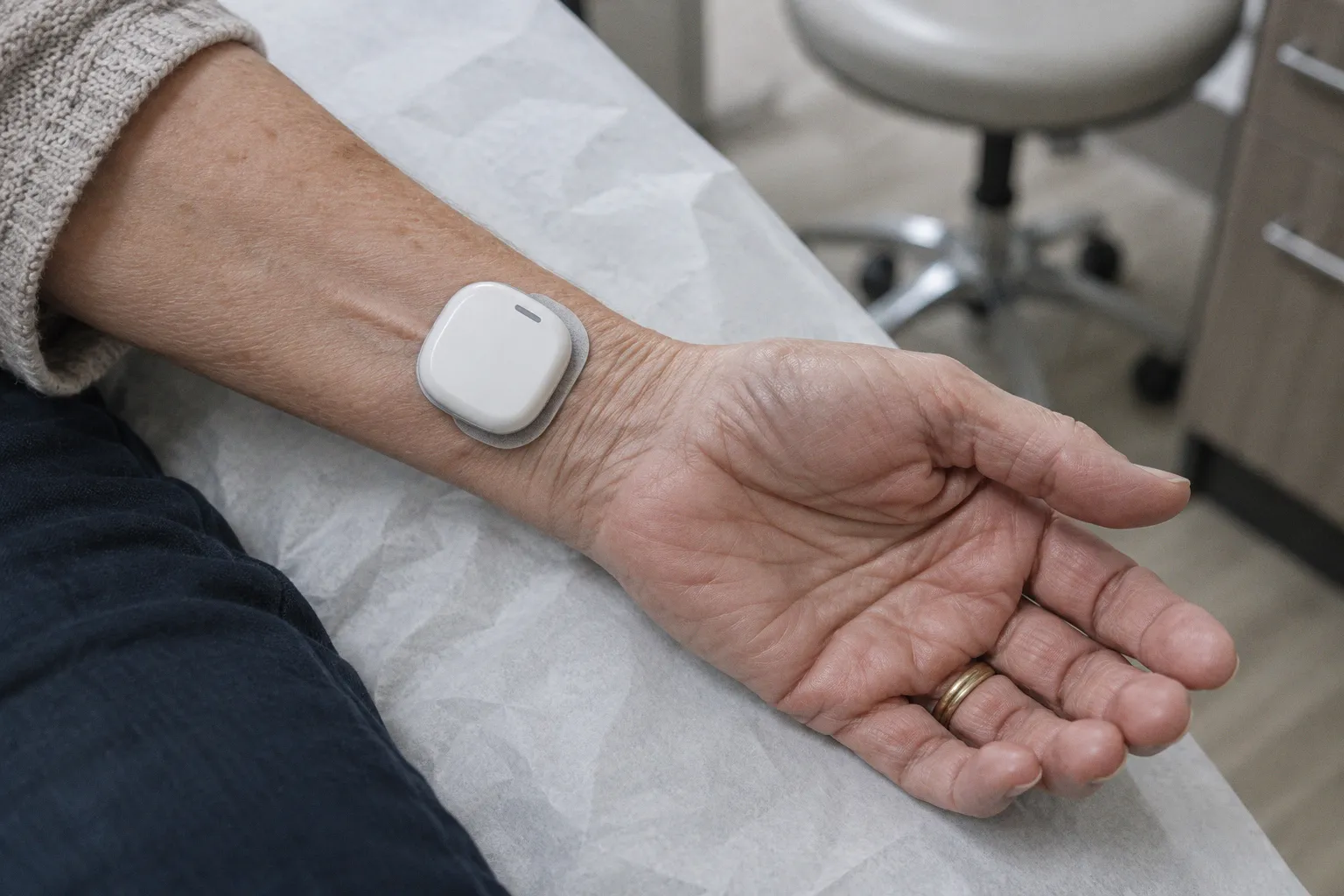
A cellular blood-pressure monitor can transmit readings without home Wi-Fi, and an EHR integration can place those readings in a provider dashboard. The operational question is harder: who reviews the data, which readings trigger action, and how does the practice document the work without creating another full-time administrative burden?
The 2026 CMS reimbursement structure makes RPM financially attractive for eligible Medicare patients. Depending on the services delivered and the applicable billing rules, a complete monthly protocol can generate an estimated $150 to $200 or more per enrolled patient. That figure is not automatic revenue. It depends on device eligibility, data-collection thresholds, documented clinical management, and a workflow that can survive the ordinary interruptions of independent practice.
The right way to evaluate an RPM platform is therefore not to begin with the dashboard. Begin with the physician’s day.
Start with the reimbursement logic, not the device catalog
Remote patient monitoring became an independent billable service set under CMS in 2019. Since then, the practical distinction has remained consistent: RPM is not simply the purchase of a connected blood-pressure cuff. It is a care process involving an eligible device, automatic data transmission, patient setup, physiological data collection, and clinical monitoring or treatment management.
For 2026, CMS added two codes that change the economics for practices with patients who do not transmit data across a full 16-day period:
| Service element | 2026 code | Operational threshold or role | 2026 amount |
|---|---|---|---|
| Initial setup and patient education | CPT 99453 | One-time per episode, when applicable | $21.71 |
| Device supply and data transmission | CPT 99445 | Data transmitted on 2–15 days in a month | $52.11 |
| Device supply and data transmission | CPT 99454 | Data transmitted on 16–30 days in a month | $52.11 |
| Treatment management | CPT 99470 | First 10–19 minutes in a calendar month | $26.05 |
| Treatment management | CPT 99457 | First 20 minutes in a calendar month | $51.77 |
The distinction between CPT 99445 and CPT 99454 is particularly relevant for independent practices. Standard RPM billing rules require at least 16 days of data collection within a 30-day period for CPT 99453 and CPT 99454. The newer 2–15-day pathway under CPT 99445 provides a route for appropriate cases where the patient’s transmission pattern does not reach that threshold.
That does not mean a practice can treat any occasional reading as billable RPM. The device still needs to meet the relevant CMS requirements, and the transmission must be automatic. A patient manually typing blood pressure into a mobile application is not the same workflow as an FDA-cleared connected device automatically sending measurements to the provider platform.
What the revenue estimate actually represents
The frequently cited $150–$200-plus monthly figure describes the potential combined reimbursement across setup, data transmission, and clinical monitoring time codes. It is a planning estimate, not a guaranteed margin and not a universal payment rate.
The practice still has to absorb:
- device acquisition or rental costs;
- platform or per-patient software fees;
- staff time for enrollment and troubleshooting;
- clinician time for reviewing trends and documenting interventions;
- outreach when readings are missing or clinically concerning;
- claims management and payer-specific variation;
- the cost of patients who enroll but do not transmit consistently.
The financial model becomes much less attractive when every abnormal reading lands directly in the physician’s inbox. That is not remote care. It is remote alert generation.
The strongest RPM program is not the one that collects the most readings. It is the one that converts clinically relevant readings into a repeatable decision process.
Before selecting a vendor, map each reimbursable activity to a real person in the practice. If the answer is always “the physician will handle it,” the program has not yet been designed.
Select hardware that removes patient friction
The device is the first point at which an RPM program can fail. Many practices assume the patient’s main challenge will be accepting the monitoring plan. In reality, the more common barrier is technical friction: pairing a device, downloading an app, finding a Wi-Fi password, granting permissions, or understanding why a reading did not upload.
Cellular-connected RPM devices address part of that problem. These devices use a 4G LTE gateway to transmit measurements automatically, bypassing the need for home Wi-Fi and reducing dependence on patient app configuration. For an independent practice, that matters because every technical failure becomes a workflow event.
A patient who cannot connect a blood-pressure cuff may call the front desk. The front-desk employee may escalate the problem to a nurse. The nurse may send a message to the physician. An apparently minor connectivity issue has now crossed three roles and interrupted clinical work.
The hardware selection process should focus on the entire transmission chain:
1. Measurement quality. The device should be FDA-cleared for its intended use and appropriate for the physiological parameter being monitored. A consumer wearable with a health feature is not automatically equivalent to a medical device suitable for an RPM program.
2. Automatic transmission. Readings should move from the device to the platform without requiring manual data entry.
3. Connectivity model. Cellular transmission can reduce dependence on Wi-Fi, particularly for older patients, patients with unstable internet access, or patients who do not use smartphones.
4. Patient usability. Large displays, clear instructions, simple cuff placement, and minimal charging requirements matter more than an impressive list of app features.
5. Replacement and support. The practice needs a defined process for lost devices, incorrect measurements, battery problems, and patients who move or change phone numbers.
6. Data ownership and export. The vendor should explain how the practice can access, export, and retain patient data if the platform changes.
The right device depends on the clinical program. Blood pressure, blood glucose, weight, oxygen saturation, and other measurements have different collection patterns and different clinical responses. A practice should not enroll a patient merely because a device is available. The measurement has to answer a clinical question.
For example, weight monitoring may be useful when changes are expected to influence heart-failure management. Blood-pressure monitoring may support medication titration or assessment of control outside the office. Glucose data may be useful when a treatment plan depends on patterns rather than a single reading. In each case, the value lies in the decision attached to the measurement.
Integrating wearable health data into the EHR
An RPM platform that operates as a separate island creates work even when its interface is polished. The central technology question is interoperability: can data move into the practice’s existing environment in a way that supports clinical decisions and documentation?
The basic architecture usually has four layers:
- the connected medical device;
- the vendor’s transmission and patient-management platform;
- an integration layer or API;
- the practice’s EHR, billing workflow, or clinical documentation system.
The presence of an API does not, by itself, establish useful interoperability. A vendor may offer an API while leaving the practice responsible for configuration, data mapping, identity matching, and maintenance. The practical test is whether the information appears where the clinician already works, with enough context to interpret it.
A physician should not have to open one system to see a blood-pressure trend, another to review the patient’s medication list, and a third to document the intervention. That fragmented workflow increases cognitive switching and makes it easier to miss a clinically relevant change.
When evaluating integration, ask the vendor to demonstrate the complete path from measurement to note:
- How is the patient matched to the correct medical record?
- How quickly does a reading appear after transmission?
- Are individual readings visible, or only a summary?
- Can the clinician see trends over a clinically meaningful period?
- Can thresholds be configured by patient rather than only by program?
- Does the system distinguish a missing reading from a normal reading?
- Can staff document outreach, education, and escalation?
- Does the record show who reviewed the data and when?
- Can the platform export a usable record if the practice terminates the contract?
The last question is often neglected. A platform can be easy to adopt and difficult to leave. Data portability is part of workflow resilience, not a legal afterthought.
Avoid turning every reading into an alert
Alert fatigue is the predictable result of poor threshold design. If every measurement outside a broad reference range creates a notification, the practice will soon develop a second problem: clinicians stop trusting the notification stream.
A useful RPM dashboard separates at least three conditions:
1. Expected data. The patient is transmitting within the agreed schedule and the measurements are within the care plan’s range.
2. Missing or incomplete data. The patient has not transmitted as expected, which may require technical support or a reminder rather than clinical escalation.
3. Clinically relevant change. The measurement or trend requires review under the patient’s documented care plan.
This separation is where clinical workflow automation for small practices can deliver real value. Automation should handle routine routing, reminders, and status changes. It should not silently decide that a complex patient is clinically stable.
The practice also needs a policy for repeated abnormal readings. A single outlier may require confirmation. A sustained trend may require medication review, a telehealth encounter, an urgent appointment, or escalation to emergency services depending on the condition and the patient’s instructions. The platform cannot substitute for that policy.
Build the monthly workflow around roles
The most workable RPM programs assign tasks according to skill and authority. Enrollment, technical support, data review, patient education, clinical decision-making, and billing are related but not identical activities.
A small practice may not have a dedicated RPM team. It can still separate the workflow:
Enrollment and education
The patient needs more than a device shipment. The enrollment conversation should cover the purpose of monitoring, the measurement schedule, how automatic transmission works, what to do when a reading is missing, and which symptoms require immediate medical attention outside the RPM process.
Initial setup and patient education are represented by CPT 99453 when the applicable requirements are met. That work should be documented as a real clinical onboarding event, not reduced to a note that a package was mailed.
Data review
Routine review can often be organized by a nurse, medical assistant operating within the practice’s protocols, or another qualified member of the care team, depending on the practice structure and applicable rules. The reviewer needs a clear escalation path.
The dashboard should make it possible to answer three questions quickly:
- Is the patient transmitting?
- Is the trend changing?
- Does the change require an action today?
If the reviewer has to reconstruct the answer manually from a sequence of disconnected readings, the platform is adding administrative work rather than removing it.
Treatment management
Clinical management is the point at which RPM becomes care rather than surveillance. The clinician or appropriately authorized team member may adjust a treatment plan, provide education, arrange follow-up, or determine that no change is required.
For 2026, CPT 99470 addresses the first 10–19 minutes of clinical monitoring and treatment management in a calendar month, while CPT 99457 applies to the first 20 minutes. The practice should apply the appropriate code under the current billing rules and should not treat the two time bands as additive minutes that can simply be stacked together.
Time tracking should be designed into the platform. Reconstructing minutes at the end of the month from scattered messages, phone notes, and EHR entries is exactly the kind of administrative work RPM is supposed to avoid.
Billing and reconciliation
Billing should be downstream of clinical activity. The practice needs a monthly reconciliation process that confirms:
- the patient was eligible for the program;
- the device met the relevant connected-device requirements;
- the required data-transmission threshold was reached for the selected service;
- the monitoring or treatment-management activity occurred;
- documentation supports the service;
- the same patient was not placed into a conflicting monitoring arrangement.
A platform that reports potential billable activity but cannot show the underlying data and documentation is not solving the revenue-cycle problem. It is creating a new audit problem.
Choose a platform by stress-testing the workflow
A vendor demonstration is usually optimized for the best possible path: the device is already paired, the patient is transmitting, the data is clean, and the clinician is looking at a neatly organized trend line. Independent practices should ask for the less attractive demonstration.
Run the platform through these cases:
1. The patient transmits one reading and then stops. Does the system identify missing data without generating unnecessary clinical alerts?
2. The patient changes devices or phone numbers. Can staff update the record without creating a duplicate patient?
3. The patient sends an implausible reading. Can the reviewer mark it as erroneous, request a repeat measurement, and preserve the audit trail?
4. The patient has a sustained abnormal trend. Can the platform route the case to a nurse or clinician with the relevant history attached?
5. The physician is out of the office. Can coverage staff see unresolved alerts and pending actions?
6. The EHR integration fails. Is there a visible status indicator, and can staff identify which data did not transfer?
7. The patient leaves the program. Can the practice stop monitoring, recover the device if appropriate, and close the documentation cleanly?
This is also the point to evaluate telehealth platform selection for private practice as a broader workflow decision. RPM may operate alongside video visits, asynchronous messaging, telephone follow-up, and routine office care. The platform should not force the practice to create an entirely separate patient identity, consent process, or documentation habit for every digital service.
The minimum viable dashboard
A useful dashboard for an independent medical practice does not need to resemble a hospital command center. It needs to surface the work that requires attention.
At minimum, the user should be able to see:
- patients currently enrolled;
- transmission status;
- days of data collected in the current month;
- current and recent trends;
- unresolved alerts;
- assigned staff member;
- last documented review;
- time accumulated for relevant monitoring activity;
- pending patient outreach;
- billing-readiness status.
The monthly data count deserves particular attention. A practice that waits until the final day of the month to discover that a patient has transmitted on only 14 days has limited options. Visibility into the 2–15-day and 16–30-day pathways allows staff to address missing transmissions earlier, while still applying the correct CMS rules.
Compliance guardrails: RPM is not RTM
One of the clearest operational boundaries is the prohibition on billing RPM and Remote Therapeutic Monitoring concurrently for the same patient within the same billing month. A practice cannot solve an ambiguous clinical program by applying both code families to the same patient for the same period.
RPM is focused on physiological data, such as blood pressure, glucose, or weight, transmitted through an eligible connected device. RTM concerns therapeutic data and has its own coding and operational framework. The distinction should be made when the patient is enrolled, not during month-end billing cleanup.
The practice should maintain a documented answer to four questions:
- What condition is being monitored?
- What type of data is being collected?
- Which service family applies?
- Who is responsible for reviewing and acting on the data?
The billing system should also prevent accidental overlap where possible. A spreadsheet may be sufficient for a pilot with a small number of patients, but it becomes fragile as enrollment grows. The more services the practice offers, the more it needs system-level controls rather than memory.
Privacy and security belong in the same conversation. RPM data includes health information moving through devices, cellular networks, vendor platforms, APIs, and the EHR. Vendor diligence should cover authentication, access controls, audit logs, data retention, breach procedures, and the handling of subcontractors. The practice does not need a lecture on abstract cybersecurity. It needs to know who can see the data, where it is stored, and how access is removed when a staff member or vendor relationship changes.
A practical launch sequence for an independent practice
The safest implementation is narrow. Start with one clinical use case, one device category, and one defined patient population. Do not launch blood pressure, glucose, weight, oxygen saturation, and wearable integration simultaneously unless the practice already has the staffing and governance to support them.
A sensible sequence looks like this:
1. Define the clinical problem. Choose a condition where out-of-office data can change management. Avoid enrolling patients simply to increase device utilization.
2. Document the care pathway. Specify measurement frequency, expected ranges, missing-data outreach, abnormal-trend escalation, and after-hours instructions.
3. Assign ownership. Name the staff member responsible for enrollment, routine review, technical support, escalation, and billing reconciliation.
4. Select the device and platform together. A strong device with a weak dashboard still produces a weak program.
5. Test interoperability before enrollment. Confirm patient matching, data visibility, documentation, exports, and downtime procedures.
6. Pilot with a controlled group. Measure staff minutes, failed transmissions, unresolved alerts, patient adherence, and the time required to close a monthly billing cycle.
7. Review the economics honestly. Compare reimbursement with platform fees, device costs, staff time, and non-billable troubleshooting.
8. Expand only after the workflow stabilizes. More patients amplify both the clinical value and the operational defects.
Patient engagement software features should serve this sequence rather than distract from it. Reminders, educational messages, multilingual instructions, and simplified onboarding can improve participation. A feature is useful only if it reduces friction or improves clinical follow-through. More notifications are not the same as more engagement.
The verdict: RPM saves time only when the practice designs the handoffs
Remote patient monitoring can extend an independent practice beyond the office without requiring custom internal IT infrastructure. Cellular-connected devices remove a major technical barrier. EHR-compatible software can reduce duplicate entry. The 2026 CMS codes create a more flexible reimbursement structure for patients who transmit data on fewer than 16 days, while preserving the established 16-day threshold for the standard monthly device-supply pathway.
None of that makes RPM self-running.
The program saves time when the device transmits automatically, the dashboard distinguishes missing data from clinical risk, the EHR receives usable information, staff have defined responsibilities, and the physician sees escalated cases rather than every raw reading. It adds administration when the platform sits outside the clinical workflow, when alerts are configured without a response policy, or when billing is treated as the main design objective.
For an independent medical practice, the buying decision should come down to one test: after the patient’s reading arrives, can the right person understand what happened and take the next appropriate action without opening three systems and interrupting the physician?
If the answer is yes, RPM can become a practical extension of care. If the answer is no, the practice has acquired a data pipeline, not a clinical service.